
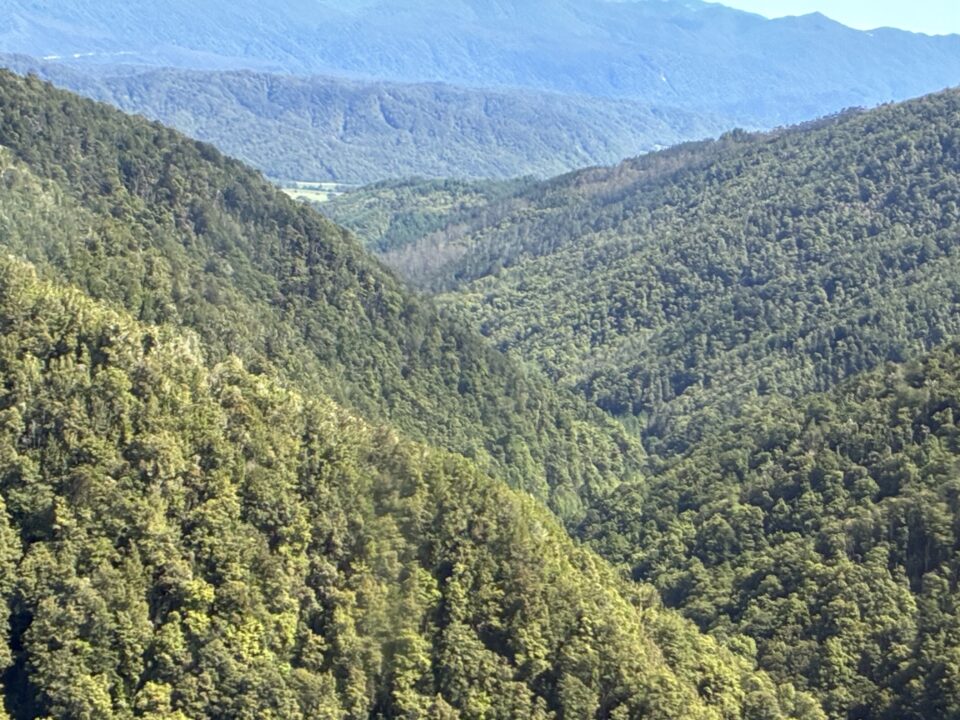
There’s icing on the golden cake that Canadian-listed Rua Gold is cooking up around Reefton on the South Island’s West Coast, and it bodes well for our wider quarrying and mining industry, explains Hugh de Lacy.
The icing is called antimony, and the spot price for this vital ingredient in batteries, plastics, textiles, electronics and alloys has doubled in the last year to around $94,000 a tonne.
It’s long been known that Reefton’s famed gold resources include antimony, but that metal has never been valuable enough to mine here.
What’s flipped antimony into the pricy metals market has been the combination of rapidly increasing Western industrial demand, and China – by far the world’s biggest antimony producer – restricting its exports sharply in response to United States import tariffs.
The result is a spike in antimony values that, combined with the underlying rising global demand, seems to assure us of a valuable new mining revenue.
The antimony market remains volatile, and the price would likely drop if China came back into it on a big scale, but Western industries’ need for antimony is immediate, and they’re prepared to pay whatever it costs.
A key element in the heightened demand has been the emergence of battery power, as opposed to mains power, for a vast array of tools and appliances.
Gold and antimony don’t always exist in the same porphyry, but they occur together in several South Island areas, including at Sam’s Creek in Marlborough and in the big Otago goldfields.
For Rua Gold the most promising Reefton tenements for gold and antimony include the Auld Creek, Cumberland Gold Camp and Pactolus veins, and accessing them depends in the short term on the Government’s fast-track consenting process.
“We’re already working on that: we’ve got consultants doing the environmental studies and we’ve got confidence in a fair and robust process,” Simon Delander, Rua Gold’s Risk, Shareholder and Regulatory Affairs Vice President, told Q&M.
“In the first quarter of this year we’re looking to have a referral application in to the Government which will allow us to fast-track the project.
“That goes in in March and, assuming that’s positive, we’ll then be into the process of preparing the fast-track application itself.”
The company has every reason to feel confident about the fast-track approach for its planned Reefton underground mine, given that the country’s biggest goldminer, Oceana Gold, got its Waihi North gold and silver extension approval through last year in just 112 days. Under the same programme, Santana Minerals’ Bendigo-Ophir gold project in Central Otago was recently granted a 30-year underground mining permit for the $4.4 billion worth of ore that it’s estimated to contain.
That project alone will create 450 new jobs – all part of the National-led Government’s ambition of doubling the country’s mineral exports to $3 Billion by 2035.
Rua’s exploratory area covers 120,000 hectares – 95 per cent of the Reefton field that yielded more than two million ounces of gold up to the 1950s but thereafter went into a decline from which it has just begun to recover in the last few years.
Typical of Rua’s Reefton resource are outcrops assayed at 16.4 grams per tonne, including the previously unexplored Pactolus vein.
Antimony is extracted from ore in the same process as gold and the concentrate that is collected is then processed overseas because there are, as yet, no facilities here to do it.
Other exotic minerals present but barely mined in Reefton’s rich dirt include titanium, garnet, zircon and monazite, the latter a source of rare earth elements.
“Antimony has been considered as an additional benefit to the existing Reefton ore body, but our primary target has been gold,” says Delander.
“Antimony is sort of tacked on to the gold resource, but it’s there in its own right, and it makes a big difference to the overall economics of the project.”
Russia, Tajikistan and China were historically the biggest antimony suppliers, but China’s slashing of its exports from 34,200 tonnes in 2021 to just 6000 tonnes last year, combined with the sanctions against Russian trade have created a scramble among American, Asian and European markets to source antimony oxides. Besides their use in batteries, they are also needed to make flame retardants in plastics and textiles, and for hardening lead and tin to use in bearings.
Increasingly, the metal is in demand in the electronics industries, not least in military applications such as ammunition primers, and in infrared flares and sensors.
Rua Gold Chief Executive Rob Eckford told Q&M late last year that the company was “very excited about the Reefton antimony in particular, and we’re already fielding inquiries for it from Japan and the United States.”
Between the antimony and the gold, the ground is so rich that it could remain in production for “Twenty, thirty, perhaps even forty years from now,” says Eckford.
The main targeted areas at Reefton are averaging between nine and 50 grams of gold per tonne of ore, with the potential to yield 1.5m/oz.
That will be supplemented by around 8000 tonnes of antimony that will give a substantial boost to Rua’s revenues.
Nor is Rua the only gold company here looking at mining antimony: Siren Gold, from which Rua bought the Reefton tenements it didn’t already own, and which retains a 26 per cent share in Rua, is exploring for antimony as well as gold at Sam’s Creek in Marlborough.
Rua does not yet have a production deadline for its Reefton assets, but the company expects to get its fast-track approval lodged this year.
“We anticipate we could be producing in early 2027 but we haven’t put a production date on it yet,” says Delander.
Meanwhile Rua’s shares were trading at a solid C$1.20 on the Canadian Securities Exchange.
“There’s been a bit of a ramp-up of the share price over the nine or ten weeks to mid-January, lifting it from around a dollar,” says Delander.
“That’s probably gold-price related, but at the same time there’s been a fair bit of news coming out about what we’re doing with antimony, and that’s helped the share price too.”
Rua Gold is also active in the Hauraki goldfield in the North Island – at the exploration stage of a 4600 hectare project called Glamorgan which is just 2.8 kilometres north of Oceana’s newly discovered Wharekirauponga claim, and which has recorded up to an extraordinary 95g/t from rock samples.
There’s no recoverable antimony in the Hauraki field, but Rua’s tenements there should be highly profitable anyway.