
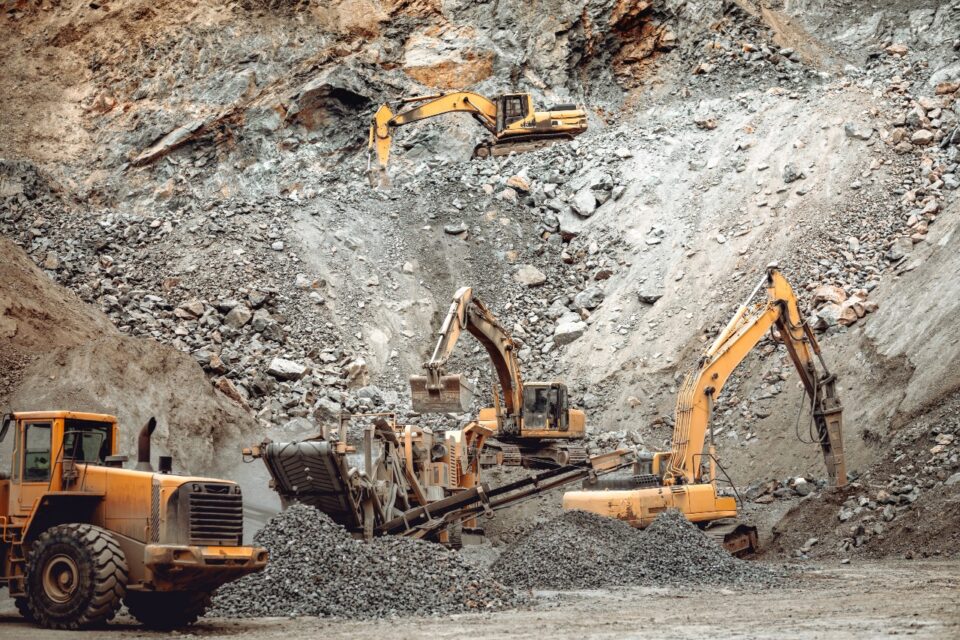

In demanding quarry applications, correct driveshaft selection and maintenance can help prevent repeat failures, protect surrounding components and keep critical equipment operating.
Dust, abrasive material, heavy loads and sudden changes in torque make quarry operations particularly demanding on driveline components.
Driveshafts may be exposed to continuous vibration, high operating loads and sudden shock forces as crushers, screens, pumps and mobile equipment process or move heavy material. When a universal joint, spline or shaft begins to fail, the effects can quickly spread through the surrounding driveline.
According to Martin Hellings, technical manager – driveshafts Aus/NZ at Motion, understanding why a component is failing is critical to improving reliability.
He says universal joint bearing failures are one of the recurring issues in high-load quarry applications. If lubrication is insufficient, needle bearings can dry out, increasing metal-on-metal friction and heat. Over time, the joint can seize, wear rapidly or fail under load.
Worn universal joints can also generate heavy driveline vibration, placing additional stress on connected components and accelerating further wear.
Shock loads take their toll
Quarry equipment rarely operates under perfectly steady loads.
Crushers, screens, pumps and mobile equipment can experience sudden increases in torque as loads change. If these forces exceed the capacity of the driveshaft, the result may be bending, twisting, denting, or complete shaft failure.
Slip splines can also be affected. Heavy shock loads may distort the spline arrangement, restricting the telescoping movement of the shaft and generating damaging axial forces through the driveline.
For maintenance teams, the advantage lies in identifying these problems before the shaft reaches the point of failure.
Common warning signs include strong vibration during operation, clunking or knocking noises, squeaking or clicking, excessive heat, looseness, grease leakage, and visible damage around the universal joints.
Universal joints, CV joints and boots, centre support bearings and the shaft itself are therefore important inspection points where they are used within the driveline.
Specification matters
A failed driveshaft cannot always be solved by replacing it with a component that appears to be the same size.
Martin says the correct part selection needs to consider the complete operating application, including the shaft dimensions, operating angles, rotational speed, torque capacity and joint type.
This is where Motion’s driveline capability, including Hardy Spicer, can help customers move from simply replacing a failed component to determining whether the original arrangement is suitable for the duty.
The approach is particularly valuable where a customer is experiencing repeated failures.
Martin says one quarry customer was replacing the driveshaft on a diesel-driven water pump after less than six months of service. The universal joints were overheating and wearing prematurely, which was also creating excessive wear on the shaft.
After visiting the quarry and observing the equipment in operation, Martin identified that the existing shaft was under-rated for the application.
“I noticed straight away that the shaft was under-rated for the diesel motor water pump.”
Rather than continue replacing worn components, the next step was to reassess the complete driveshaft specification.
“The first stage was to do a shaft selection that calculated the torque, RPM, length, and compound angles.”
That process allowed Motion to recommend a Hardy Spicer Industrial series driveshaft better matched to the operating requirements of the pump.
Addressing the cause
The change was more than a component replacement.
By reviewing the load, speed, geometry and operating conditions, Motion was able to address the reason the original shaft was failing rather than continue responding to the same symptoms.
The replacement was also supported by recommendations for ongoing servicing of the Hardy Spicer Industrial driveshaft.
According to Martin, the customer has experienced no further driveshaft issue since the new arrangement was installed.
For quarry maintenance teams, the example shows why recurring vibration, heat or universal joint wear should be investigated rather than treated as isolated failures.
Operating conditions, shaft capacity, joint selection, lubrication, and driveline geometry all influence service life. A problem in one area can place additional load on the rest of the system.
Motion can support customers with driveshaft identification, component selection, inspection, preventive maintenance and repair requirements, helping determine whether a damaged component needs replacing or whether the application itself needs to be reconsidered.
In quarry environments where equipment is expected to keep working through dust, shock loads and demanding duty cycles, getting that specification right can make the difference between another repeat repair and a driveline built for the job.