
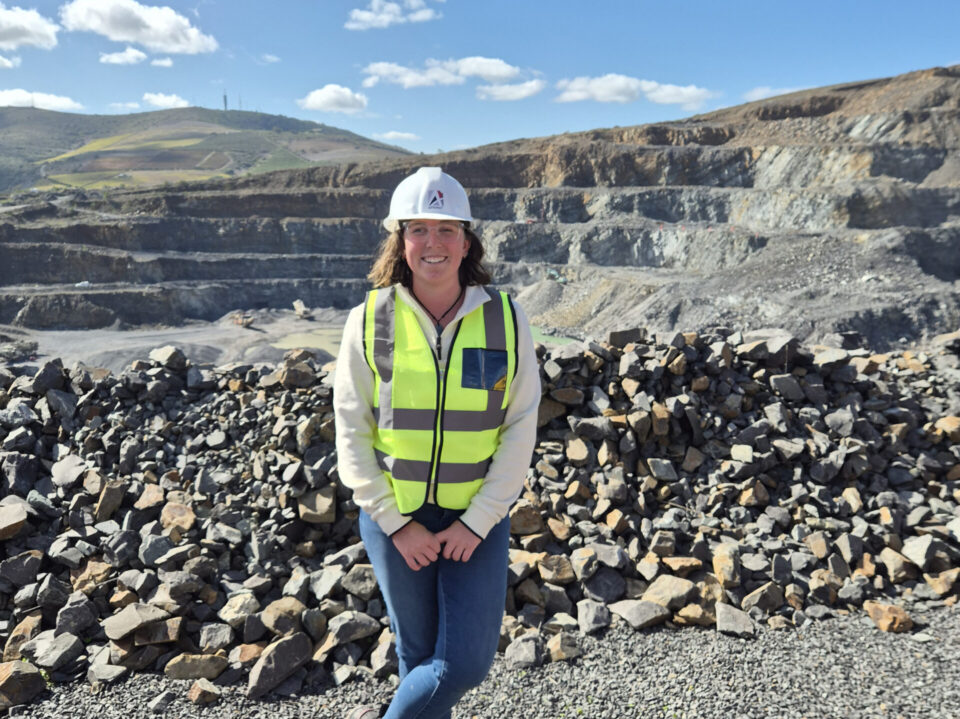

Image: Ella Mischefski-Gray at AfriSam Quarry in Johannesburg.
A recent tour of South Africa showed me the foundations of a strong industry are remarkably similar: innovation, community trust, environmental care and investment in people, writes Ella Mischefski-Gray, the Logistics Manager at Manawahe Stone and Quarry.
Ella gave a talk at the QuarryNZ Conference in Invercargill in July.
When I tell people I work in a quarry, the response is almost always surprise. Many still imagine little more than a hole in the ground. In reality, quarrying is a highly technical, fast-moving industry that supplies the materials behind our roads, bridges, subdivisions and major infrastructure.
At Manawahe Stone and Quarry in the Bay of Plenty, we produce around 140,000 tonnes of hard rock each year and are one of the handful of quarries that can produce M401. As Logistics Manager, I coordinate transport and production, work with operators, customers, contractors and drivers, and solve the daily challenges that keep material moving. After just over two years in the industry, I have fallen in love with its pace, variety and sense of purpose.
A recent young professionals tour of South Africa showed me that, despite the distance between our countries, the foundations of a strong industry are remarkably similar: innovation, community trust, environmental care and investment in people. It also changed how I see my own role and the contribution our sector makes every day.
Earlier this year, I was fortunate to represent New Zealand on the Institute of Quarrying’s Young Professionals Tour to South Africa, alongside a group of young professionals from Australia. I expected quarry visits, equipment demonstrations and the Institute of Quarrying Southern Africa (IQSA) Conference. I did not expect the experience to teach me so much about leadership, culture, conservation and the value of international relationships.
Johannesburg immediately showed us a country of striking contrasts, but the industry priorities felt familiar: safety, productivity, technology, environmental responsibility and workforce development.
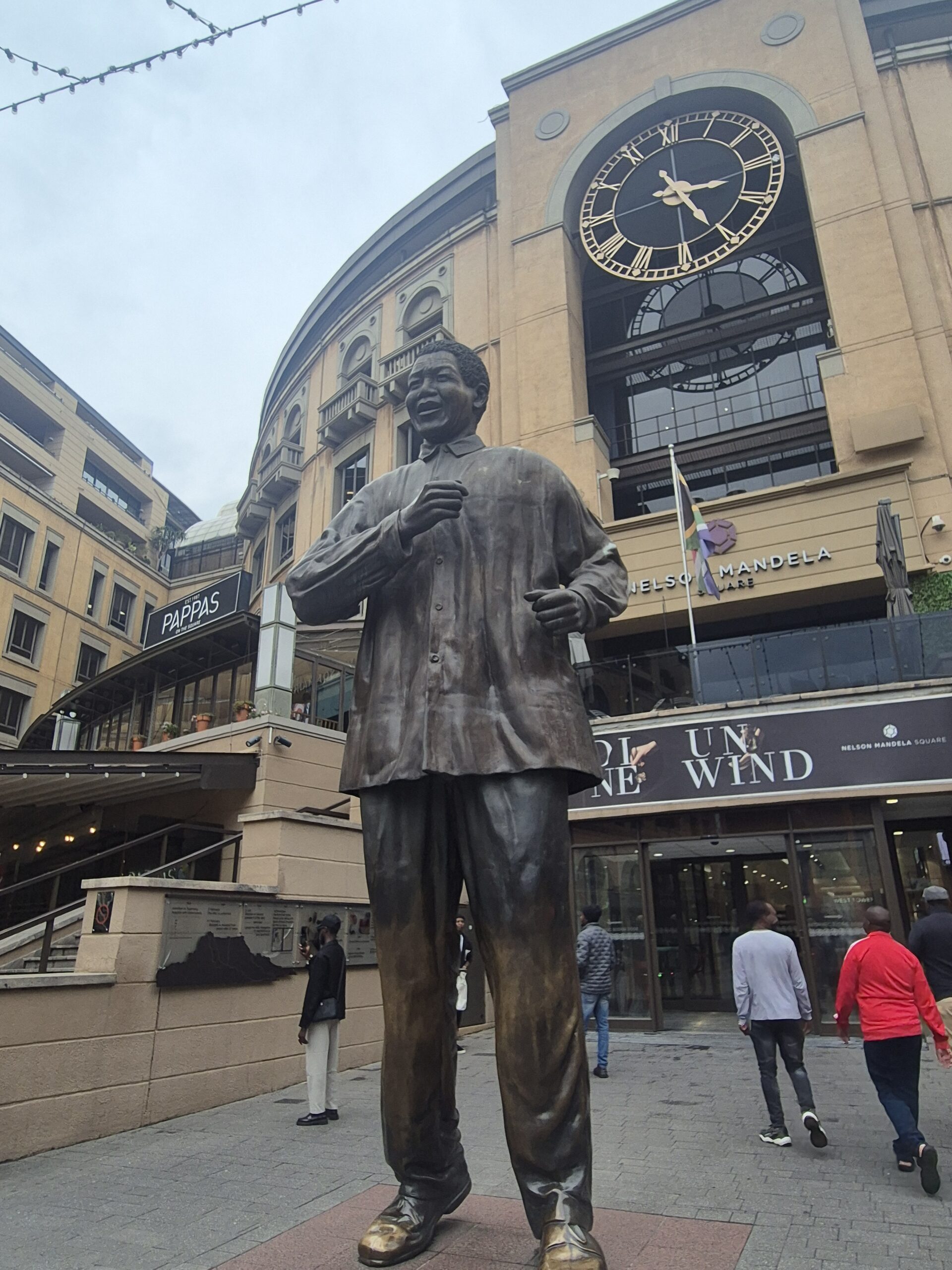
At Multotec, flexible screening systems demonstrated how a practical design change can reduce build-up and maintenance. Loadtech showed how weighing systems and real-time information can improve accuracy and reduce manual processing – an important lesson as labour shortages make smart technology increasingly valuable.
Visits to AfriSam and Astec reinforced two other essentials. Strong engineering and quality control matter, but so do strong community relationships. Quarries need to communicate openly with neighbours, create opportunities and demonstrate responsible environmental management if they are to maintain the trust that allows them to operate.
In Durban, the IQSA Conference brought together professionals from around the world. Presentations covered illegal mining, sustainability, innovation and workforce development, yet one question kept returning: how do we encourage more young people into our industry?
Quarrying offers careers for operators, mechanics, engineers, geologists, surveyors, environmental specialists, laboratory technicians, transport professionals and business leaders. Automation, drone surveying, machine guidance, digital fleet management and data-led decision-making are already changing everyday operations. The opportunities are broad, but public perception has not kept pace.
That makes early engagement vital. We need to connect with schools and apprentices, explain the range of pathways available, and give young people opportunities to learn, travel, network and lead. The Young Professionals Programme is valuable because it builds confidence as well as technical knowledge. It tells emerging professionals that they belong in the room and have a part in shaping what comes next.
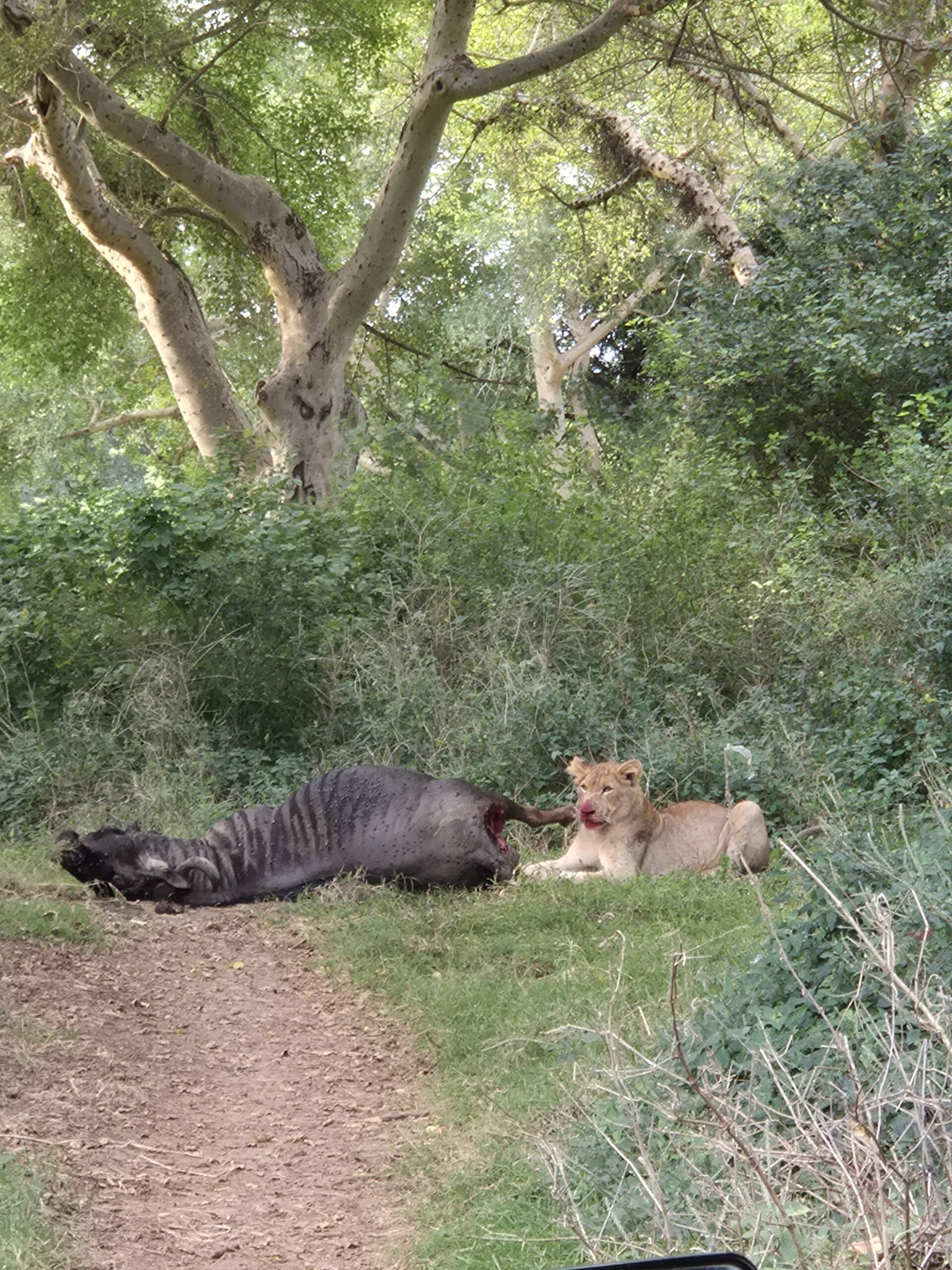
The tour also broadened my understanding of environmental stewardship. On safari near Ghost Mountain, we learned that conservation involves habitat management, population monitoring, invasive species control and support for local communities. The wildlife was unforgettable, especially seeing a bull elephant at the end of a long, hot day – but the deeper lesson was that responsible land management is universal.
In New Zealand, that same principle guides rehabilitation, native planting and the restoration of waterways and productive land. At Manawahe, environmental care has been part of the operation from the beginning, including returning worked areas to farmland and planting native borders to encourage birdlife.
Cape Town and Robben Island added a powerful human dimension to the journey. South Africa’s history, inequality and resilience reminded me that every community carries its own challenges, and that businesses can make a difference through the opportunities they create.
I returned to New Zealand with new ideas, greater confidence and lifelong industry connections. The tour proved sharing knowledge across borders can accelerate progress, while giving young professionals the perspective and relationships they need to contribute with confidence.
Most importantly, I came home convinced quarrying’s future will not only be shaped by the equipment we buy or the technology we adopt. It will be shaped by the people we encourage, mentor and invest in today.
• Ella was the only New Zealand participant on the Young Professionals Tour. However, she says the current IOQNZ President, Lance Gosling, attended the conference separately.
Around 280 delegates attended the IQSA Conference.
“While a lot smaller than our conference, it had a strong international presence with attendees from New Zealand, Australia, the UK, Hong Kong, Malaysia, and several African countries,” says Ella.
IOQ NZ gave Ella $2,500 and her company covered the rest of her costs.